How do you know if you pet enjoys training?

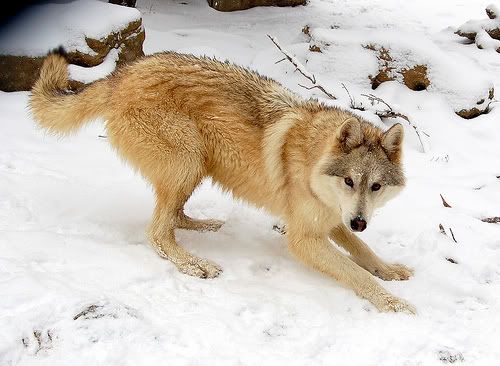
Pwolf in a playbow

Photo: Wolf in Playbow

One of the things that still amazes me is how people fail to understand what animals are communicating.

When I conducted group dog training classes for the area’s park district, dogs were always happy and excited to come to school.

However, when I started teaching up here I got a lot of flack.

Why?

Because I did not allow choke chains. We used head collars, or the dog’s regular collar, for training and focused on praise more than correction.

When I relocated to a small mountain community, there was not even a pet store. We did have a feed store but everyone was behind the national trend when it came to sophistication over animal care and training.
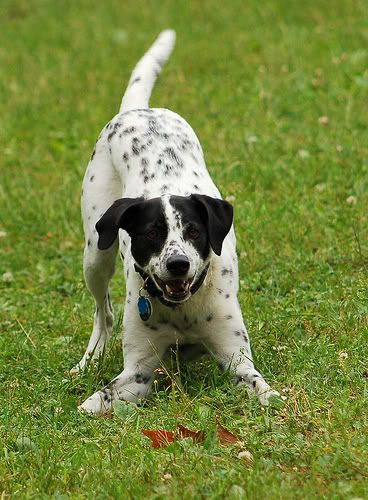
Photo: Dog in Playbow

Dog in Playbow

Back then, Dr Roger Mugford and I shared a mutual friend and he was just introducing the Halti head collar and a citronella spray collar–now a standard in humane animal training methods.

So, when we met in person, I got the prototypes to test here in the USA.

Since I’ve always considered myself pretty progressive in my animal training methodology, I was surprised when lots of people got upset when I was out in public with an outfitted dog.

Members of the general public thought the head collar was a muzzle and got mad.

Muzzles prevent a dog from biting. Usually a muzzle indicates that a dog is a biter and is a protective device to prevent such altercations in public.

Which begs the question, why would you be mad about a dangerous dog wearing a muzzle when it is out in public?

Anyway, people thought it was “cruel” because the were uneducated in the nuances of animal training.

Some were downright ignorant–but I digress–as usual.

Anyway, my students were always happy to come to class. Human students reported that their dogs knew the day they were supposed to go to school and would wait at the door, bring the leash, and other such actions on the day of class.

Not so in a lot of courses.

So how do you know if your pet enjoys training?

It boils down to body language and the dog’s demeanor. Take a close look at Ellie in the next photo. Her mouth is open in a relaxed pant, her ears are up, she is giving good eye contact, and her body posture is relaxed.
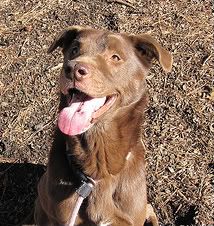
Happy Dog Training Student

Happy Dog Training Student

When an animal has a positive association with training, he or she learns more easily and is not afraid of making mistakes because that is part of the learning process.

When an animal has a negative association with training, he or she is not apt to explore since negative consequences squelch such exploration.

You can tell the type of association the animal has with training simply by looking at them, or by their actions.

For example, I was called in to help with a young female Bernese Mountain Dog and her doggie delinquent pals. When I arrived the adolescent female did not want to come near me.

During my collection of her history, I found out that there had been a previous “trainer” who had worked with them. I didn’t think much about it initially, thinking it was a temperament and socialization issue that needed more skilled attention.

However, as we continued in our relationship, I discovered how harsh the “trainer” had been with a dog that needed a soft touch and that ended up being eager to learn.

About the third lesson the dog came to greet me and showed that she trusted me.

I’ll spare you the details of all the abuse the dog experienced under a “trainer” (who was really an unskilled hobbiest) but will tell you that when I asked how this dog reacted when the former “trainer” arrived for lessons, the owner said that she ran into the back bedroom to hide and to get as far away from her as the animal could.

Just why my client didn’t think there was anything wrong with the training they were undergoing prior to our relationship confused me.

If your dog is showing signs of discomfort, distrust, and avoiding a trainer you have brought into the home, you should terminate the relationship and find someone that you both like and trust.

The dog will show you through body language and their actions whether or not they are comfortable with the training.

In some cases, the dog will not immediately trust a stranger, but in most cases, they will reveal how the process fits (or doesn’t fit) for them through their behavior and body language.

Photo Uncomfortable Puppy

Photo Uncomfortable Puppy

What does the next photo communicate to you?

Look at the position of the head and ears, the whites of eyes, the tightly closed mouth, and the tense, hunched positioning of the puppy.

It should be easy for you to tell the difference between the photo of the dog performing a sit happily and this puppy who is not comfortable at all.

Look around when you next watch a dog training class and identify what you see.

Which brings me back to the famed television star I wrote about a couple of days ago.

A few comments were let on the Cesar Millan article that were pro which is actually the predominant opinion from the general public.

I want to challenge you the next time you watch the show, to look at the animals closely and see if you can determine if that canine client is comfortable or trusting.

Then, as a contrast, click over an take a gander at Victoria Stillwell’s show and do the same thing.

See if you can determine what the difference is in approach and what the differences are in the demeanor of the animals in each show.

Then come back and leave your comments below!

Canine Studies Diploma Course Online

Today more and more people are studying online. I’ve been actively enrolled in online courses regularly since 2000 and currently get continuing education unit from participation in programs online.

As a result, we are no longer limited to where (or with whom) we study.

So, if you are looking to help yourself along on an animal career path, one of the great options is to study online.

I have a course in progress that will launch 2010-2011 but in the meantime wanted to share a few options for you to investigate from the UK.

I actually flew over to England and stayed while I studied and worked with endangered species but I had also sourced an online university that offered a zoo course way back in the 1980s.

Anyway, today I am going to outline the Canine Studies diploma course. It is a fully accredited Level 3 (UK designation) diploma course for dog enthusiasts who are simply interested in dogs or who are seeking employment in the canine world. Students who pass the final online examination will be awarded a diploma in Canine Studies.

The nice thing about online studies is that you can usually go at your own pace and in the Canine Studies diploma course allows you one year to complete this course from the time you register for the class and requires an estimated 400 hours of study to complete.

Canine Studies Awards
In the Canine Studies course you actually get two for one. Students that meet the final examination qualitifcations for graduation will receive a certificate from both the college and also the awarding body, Ascentis. These fees are included in the course fee.

International students are welcome and there is open enrollment–you can enroll at any time.

Canine Studies Course Syllabus
Introduction to Canine Studies
The first module in the Canine Studies course takes you into the history of canine domestication. Topics covered include:

  • Taxonomy (How dogs are classified and where they fit into the animal kingdom)
  • Canine origins and theories as to how they evolved from their ancestors
  • History of canine domestication
  • Contrasts and similarities between dogs and wolves
  • Dogs and their relationship with humans

Canine Anatomy and Physiology
In this module students learn about the anatomy and physiology of canines. Including:

  • skeletal system
  • muscular system
  • nervous system and sensory organs
  • endocrine system
  • circulatory system
  • respiratory system
  • immune system

Nutrition
Nutrition is the science of food and of nourishing the body and to maintain healthy physiological systems understanding it is crucial. This module introduces the following:

  • The canine digestive system
  • Nutritional requirements of the dog
  • Aging influences on protein and fat needs
  • How to monitor diet effectiveness
  • Health complications from incorrect feeding
  • Toxic food that pose risks to dogs
  • Digestive system ailments

Canine Diseases
This module is an overview of infectious and non infectious diseases. Overview touches onto:

  • Disease causing organisms (bacteria, fungi, viruses, and the differences between them)
  • Internal and external parasites
  • How to identify factors that transmit diseases
  • Some degenerative diseases

Canine Health and Veterinary Care
This module goes into a few previously studied diseases and outlines how they can be diagnosed, treated, and prevented.

  • Diagnostic methods and medicines for canine diseases
  • Diagnostic methods, treatment and prognosis for injuries
  • Legal restrictions in the veterinary profession and general public
  • Dog First Aid
  • Small animal practice technology and equipment

Canine Genetics
Explore the science of genetics in this module. Includes an introduction to:

  • Terminology of genetics
  • Genetic science
  • Genetic mutations
  • Differences between natural selection and artificial selection
  • Theories of evolution
  • Genetic disorders in the dog

Reproduction
This module covers the physiology of reproduction and the care of the neonates.

  • Reproductive anatomy of the dog
  • Reproductive anatomy of the bitch
  • The oestrus cycle
  • Conception and development of pregnancy
  • Whelping
  • Development of neonatal puppies
  • Natural and artificial insemination
  • Pregnancy complications
  • Birth complications

Behavior
Canine behavior laps over into biology, neuroscience and psychology and this module covers:

  • Similarities and differences between wolf behavior and domestic dog behavior
  • Genetic influences in behavior, and the differences between breeds
  • How dogs learn and learning theories
  • Brain areas associated with various aspects of behavior
  • Senses and how they affect behavior
  • Diet, hormones and health effects on behavior
  • Previous experience influences on behavior
  • Stereotypical behavior
  • How dog learning can be used during training

Canine Behavior II
This module delves into behavior problems.

  • Common behavior problems
  • Why problem behaviors occur
  • Behavior problem evaluation techniques
  • Ways behavior can be shaped and altered including veterinary treatment

Working with Canines
This module explores the canine industry such as:

  • Organizations involved with dogs and research
  • Types of jobs available working with dogs
  • Dog laws (working with dogs, ownership of dogs)
  • Requirements of running a canine business
  • Setting up a boarding kennels
  • Breeding dogs

As you can see the Canine Studies course is a fairly good overview if you are interested in canines.

In addition to the course materials, students will have access to a special location (student commons) course updates, extra materials and other information.

These is also a student chat room and forum to round out the online student community.

This is definitely an introductory course as no previous skills or qualifications required to register for this study program and tuition can be paid in one payment or by a deposit and monthly payments. .

All students will also have their own personal tutor that can be contacted via telephone or email and unlimited support Monday to Friday.

Click this blog’s affiliate link for further information, or to enroll in the canine studies course.