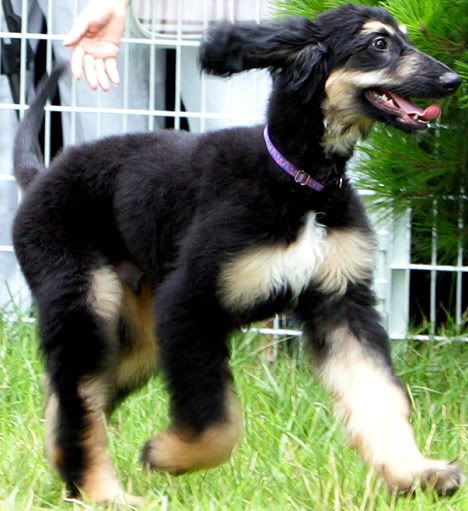
Above: Snuppy the Cloned Afghan Hound
In the mid-1990s I was an animal behavior practitioner in a progressive animal clinic in the North County area of San Diego.
The other unique associates included a natural nutritionist, two animal psychics, an animal body work therapist, a holistic veterinarian, and a cryobank specialist who had begun to collect cells for future cloning.
Today such practices are not so out of the norm but at the time we were certainly out of the box when it came to progressive animal care.
So, when the topic of cloning came to the forefront in a radio interview done by the owner—well, the broken windows and other hateful activities at the upscale clinic took us by surprise.
Today cloning discussions are no less volatile but people are more amiable to the idea that has become a reality.
Not too long ago RNL Bio, a company based at Seoul National University, made the news for recently cloning an American pit bull terrier for $50,000. The DNA of the dog was passed on to five puppies. The company is now offering cloning services globally with its estimated capacity to clone about 300 dogs per year.
The first successful dog cloning hit the news a few years ago when Snuppy, the Afghan hound was born. At the time the procedure was still new and full of difficulties.
To obtain Snuppy, over 1,000 embryos were transplanted (into over 120 bitches). Despite the volume only three of the transplants resulted in pregnancies. Not all of them were successful but it made headlines.
Differences in the reproductive cycles between cats and dogs have made it easier to clone felines whose cycles can be induced instead of waiting for the once or twice annual receptivity of the dog. The now defunct Genetic Savings and Clone was successful with cats but hit difficulties when it came to dogs.
When it comes to cloning people mistakenly think they will get the same animal back. This is not true because an exact replica is unlikely. Coats, markings, and temperament and personality will not be the same but the animal will be genetically identical.
Guidelines will have to be developed in a variety of professional animal organizations. May will want to determine whether or not an animal is cloned. Screening via DNA from both parents can be used to identify offspring versus a clone animal.
Some argue that cloning might help preserve rare breeds but the American Kennel club is currently opposed to the procedure.
Today the worry over cloned pets is minor due to the high price of producing such animals but eventually technology and demand will drive the cost factor down.
Even so, I doubt that the arguments over the procedure will be less fierce.
Do you have an opinion on cloning animals? If so, leave a comment below.
 Until November 18, 2008 the US Food & Drug Administration is seeking public comment about the use of genetically engineered animals in research and food production.